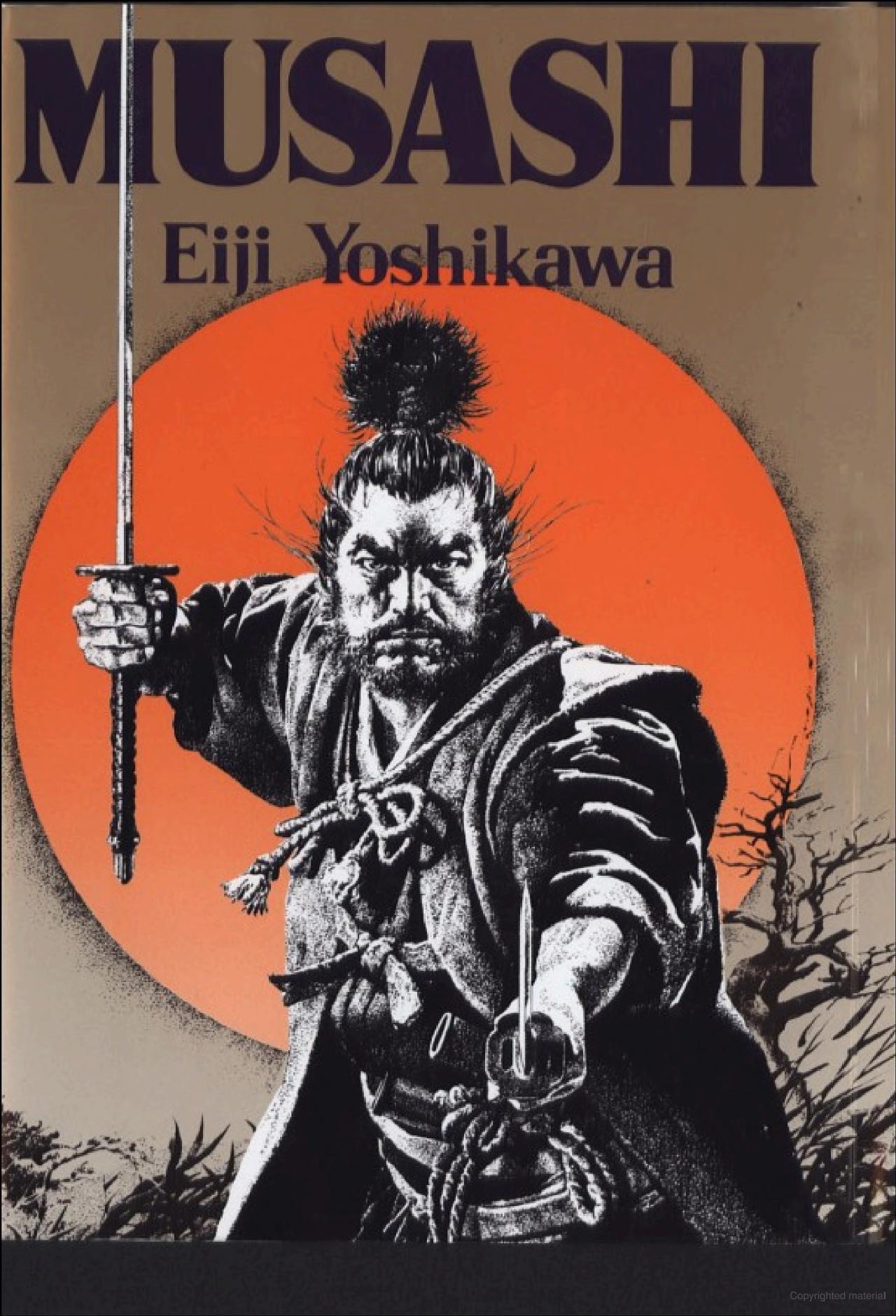
The novel Musashi is an easy, unpretentious read, with a style so straightforward that it occasionally feels almost childlike. This simplicity makes the book highly accessible, but at times it also strips the narrative of some emotional depth it could have had.
On the other hand, the author weaves Buddhist-inspired philosophical ideas into the story in a subtle, non-intrusive way. These moments aren’t presented in a didactic fashion but rather slip naturally into the flow of the narrative, noticeable only to a reader who pays close attention. This is, in my view, one of the book’s strongest qualities.
Despite being an epic in length, the story flows easily. My main challenge came toward the end, when the author began referring to characters solely by name—characters whose storylines had occurred far earlier in the book. This made it difficult to recall who was who, especially among secondary characters. For the most part, however, the plotlines are clear and easy to follow.
Before reading the novel, I had already read the manga Vagabond, which was inspired by Musashi’s story. I expected the original to surpass the adaptation, but to my surprise, the manga proved far more inspiring. It takes creative liberties, shifting the focus and telling the story in a way that, for me, conveyed Japanese culture more vividly. This left me wondering: is it possible for a derivative work—in what many might consider a “less serious” medium—to surpass its literary original?
In music, I’ve come across covers that outshine the original songs, but with books, I had never experienced that before. Now I find myself asking: could there be a film adaptation that surpasses the book it’s based on?
In the end, Musashi left me with mixed feelings. I didn’t find the deep, captivating read I was hoping for, but I appreciate its unique ability to embed philosophy into an otherwise simply told story. It’s a rare balance, and not every work can pull it off.